Do you know what happens to a computer after you press the power button? In the case of operating systems based on Linux, after the computer is started with the physical switch, specific systems are launched in a certain order.
An approximate startup algorithm for a GNU/Linux OS with a graphical interface:
Computer start --> BIOS/UEFI --> OS bootloader --> Linux kernel --> Init system --> DesktopToday let’s talk a bit about init systems in Linux. The following systems are actively used today:
- Systemd
- System V Init
- OpenRC
- Runit
- Upstart
- Others, less popular
The most widespread init system in Linux is the relatively new Systemd. Its main feature is the intensive parallelization of services and processes launched during system boot, which allows a significant reduction in the overall OS startup time.
Systemd’s active, even aggressive, spread across all popular distributions took place in the 2010s, thereby displacing other, classic init systems.
Initialization plays an important role in the operation of the system and its functioning. Such an abrupt transition of most leading Linux distributions to using Systemd as the init system was, to put it mildly, not to the liking of many users and administrators.
The changes that Systemd introduced into the OS operation process forced many to seriously rework their habits and redo their existing administration tooling. This, of course, causes tons of indignation to this day.
Because of such an abrupt and aggressive “takeover” of the leading Linux systems, many people dispute the rationality of using Systemd, citing the large amount of “responsibility” that this system takes on when working in a GNU/Linux OS. In the opinion of many, this also contradicts the Unix philosophy: “One task — one program.”
Nevertheless, Systemd is the main init system on the distributions that hold a dominant position in the server solutions segment of the IT industry.
Here is a diagram of how Systemd functions:
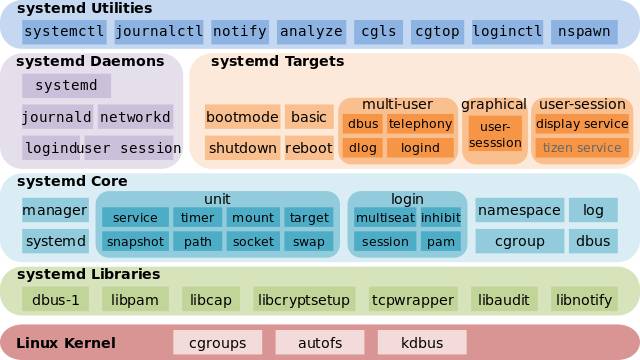
Source: Wikipedia
Thanks for taking the time 😉
A few links to read:
👨💻And…
Don’t forget about our Telegram channel 📱 and chat
Or maybe you want to become a co-author? Then click here🔗
💬 All the best ✌️
That should be it. If not, check the logs 🙂