
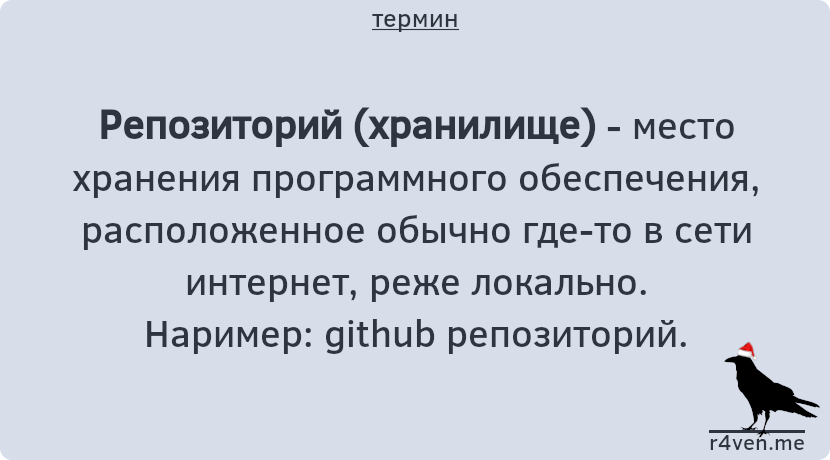
There are various types of repositories. For example, repositories of programs written in a single programming language, or intended for a specific platform. The latter includes repositories of Linux and other *nix systems. Repositories are also actively used in version control systems, for example in git systems.
In the Linux world, repositories are usually divided into two types: officially maintained by the developers of a specific system (distribution), and user (third-party) repositories, connected manually.
For example, the official repositories for Debian-based (Ubuntu, Linux Mint) Linux distributions in most cases contain ready-made, compiled versions of deb packages, in the form of which programs for these platforms are distributed.
As for distributions based on Arch Linux, in addition to the official repos, there is a huge user repository — AUR, for which the project’s own official resources are allocated, but the repository itself is not official. It is filled only with user programs in the form of source code, which need to be built on your own computer manually. Such programs are moderated by Arch users themselves, who have been approved by the community for this task.
A few links from Wikipedia:
👨💻And…
Don’t forget about our Telegram channel 📱 and chat
Or maybe you want to become a co-author? Then click here🔗
💬 All the best ✌️
That should be it. If not, check the logs 🙂