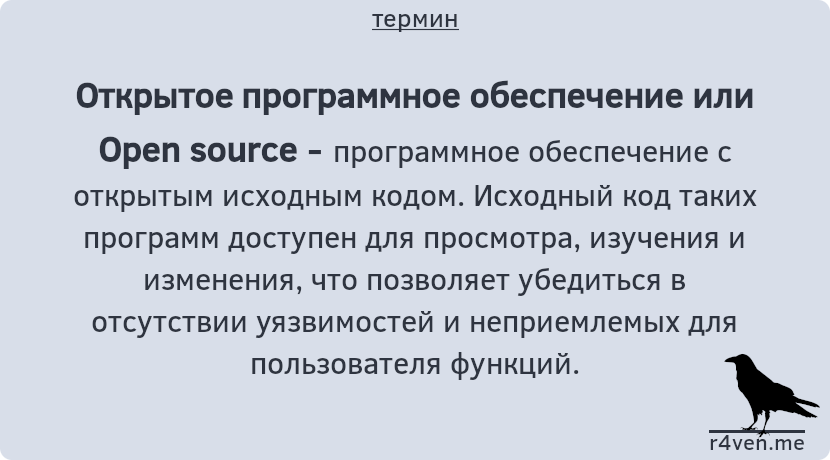
Open software, or software with open source code, also known as Open source, is a term that has been appearing more and more often on internet resource pages lately. This concept emerged, if my memory serves correctly, around the end of the 90s.
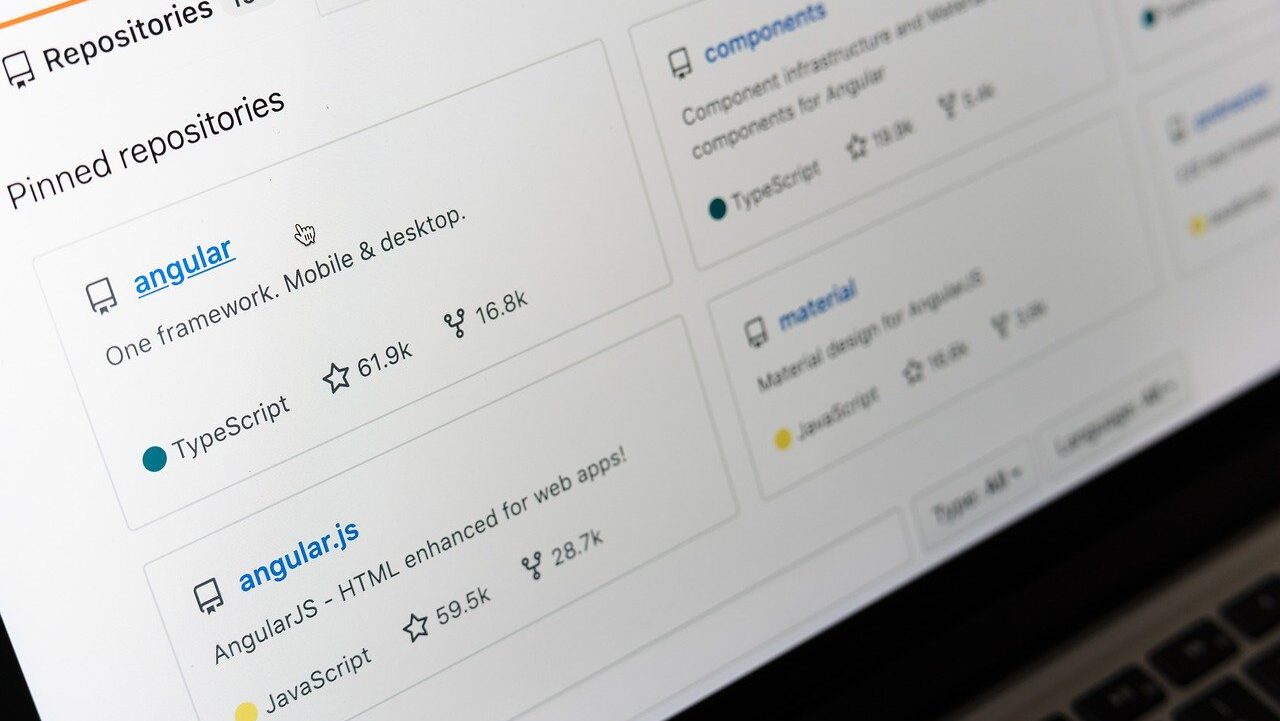
Photo by: viarami
🖐️Hey!
Subscribe to our telegram @r4ven_me📱 to not miss new publications on the site😉. And if you have questions or want to chat about the topic — check out the Raven chat @r4ven_me_chat🧐.
The term Open source refers to software whose source code (program text written in one of the programming languages) has been made publicly available, that is, published on some specific resource, whether it be the personal website of the program’s author or a so-called git repository, most often github.
Open software should not be confused with free software and freeware. We’ll discuss those another time.
Open software is distributed under one of the free licenses: GNU GPL, MIT, BSD, etc., meaning it is free for personal and commercial use provided certain conditions are met. There will also be a separate post about licenses.
An example of open-source software is the Linux kernel, which underlies many server technologies on the internet, as well as a small percentage of desktop solutions. That is, the source code of this kernel has been made publicly available and is hosted on the kernel.org website. It is written primarily in the C programming language.
Open software, unlike proprietary software (for example Windows 10), makes it possible to audit the source code, and if any backdoors, hidden features, or vulnerabilities are found, the community usually reports this to others, including the developers themselves, so that they, either on their own or with the community’s help, release a patch (fix) for their program.
The principle of developing and distributing open-source programs creates a certain dependency of developers on community opinion. There have been scandalous cases where developers, without users’ knowledge, introduced various kinds of telemetry or deliberately left vulnerabilities in their programs. If the software had open source code, enthusiasts would discover the flaws and report them to the public, which inevitably had a detrimental effect on the reputation of the program’s developers and users’ willingness to continue using it.
This development principle has formed a certain concept of behavior among software developers, which implies maintaining the openness of their products, readiness for audits, and, as a result, showing greater respect for the freedom and privacy of their users compared to proprietary software, which cannot help but be pleasing. You’ll agree, it’s more pleasant to work with programs that you know undergo some kind of code audit by the community, where anyone can propose their ideas for changing or extending functionality, and if the developer has a good reputation and is popular, then everyone will be satisfied.

Photo by: PhotoMIX-Company
It’s worth noting that when using a business model based on developing open-source programs, it is significantly harder to gain commercial benefit than when implementing proprietary software. After all, anyone can download open-source products published on the internet under free licenses, whether as ready-made program builds or by building them from source themselves, and all of this completely free of charge. Of course, there are nuances, and they depend on the developer’s choice of a specific free license. Here companies have to show commercial creativity in order for the enterprise to be profitable.
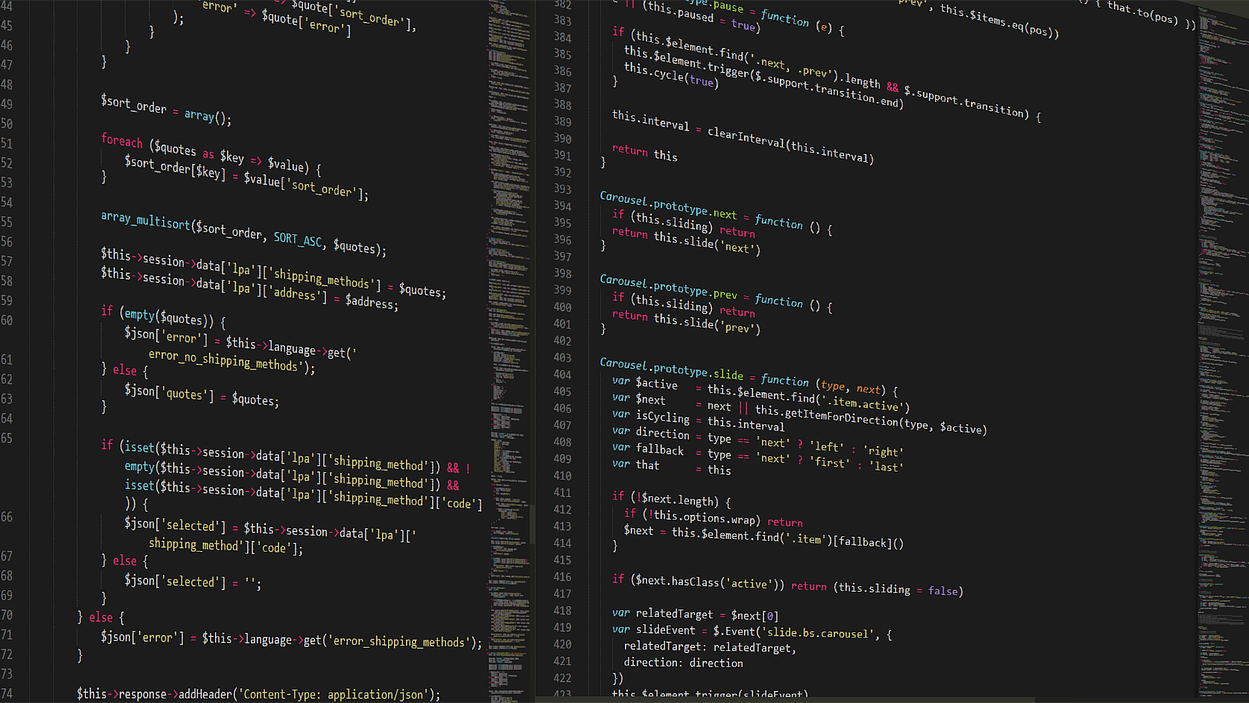
Photo by: Boskampi
Speaking of community.
When the source code of popular programs is open, various people regularly take an active part in its improvement, bug fixing, or adding functionality. And this is usually all for free, that is, out of the goodness of their hearts, so to speak. Of course, behind this lies the personal motivation of such people to gain approval from others like them, and of course, besides personal growth, to also gain professional growth.
These are all basic concepts underlying the very concept of open software.
You can read more about the term on the Wikipedia page.

Comments